A sales rep says the proposal is signed. The project manager cannot find the approved scope. The crew is scheduled, but nobody knows whether the deposit cleared or if the homeowner selected the shingle color. That is not a communication problem. It is an operations problem, and a roofing CRM is supposed to prevent it.
For roofing contractors, the value of a CRM is not a bigger contact database. It is a clear, usable record of what has happened on every lead, bid, and job - and what needs to happen next. If the system makes estimators, salespeople, production managers, and field crews hunt for information, it adds overhead instead of removing it.
A Roofing CRM Should Run the Job Handoff
Roofing work moves quickly, especially after a storm or when a commercial bid deadline is close. A new lead may need an inspection, photos, a measurement order, an estimate, a proposal, financing details, scheduling, material ordering, and crew assignment within days. Each handoff creates an opportunity for missed scope, duplicate entry, or a promise that never reaches the production team.
A useful roofing CRM keeps those handoffs connected. The lead record should become the estimate record. The approved proposal should become the production scope. The production scope should give the scheduler, crew, and customer service team the same source of truth.
That does not mean every contractor needs the same workflow. A residential replacement contractor may need fast lead intake, visual proposals, and homeowner communication. A commercial roofing company may need bid tracking by GC, plan-set documents, alternates, multiple revisions, and long sales cycles. The system should support the way your jobs actually move, not force every opportunity into a generic sales pipeline.
Lead intake needs job details, not just contact details
A roofing lead starts with more than a name, phone number, and email. Your team needs property address, building type, referral source, claim status where applicable, roof type, urgency, inspection date, and the person responsible for the next step.
That information should be visible without opening a chain of emails or text messages. When a lead is reassigned, the next owner needs context immediately. A CRM that captures only basic customer data leaves the real job details scattered across notebooks, photos, inboxes, and individual phones.
Lead source tracking also matters. If canvassing, referrals, paid ads, GCs, and insurance restoration work all feed the pipeline, you need to know which sources create signed work and which create inspection volume without margin. Closed revenue is more useful than lead count alone.
Estimates must carry the scope forward
The estimate is where roofing CRM software often separates itself from generic platforms. A generic CRM can track a deal stage. It usually cannot handle the working detail behind a roof scope.
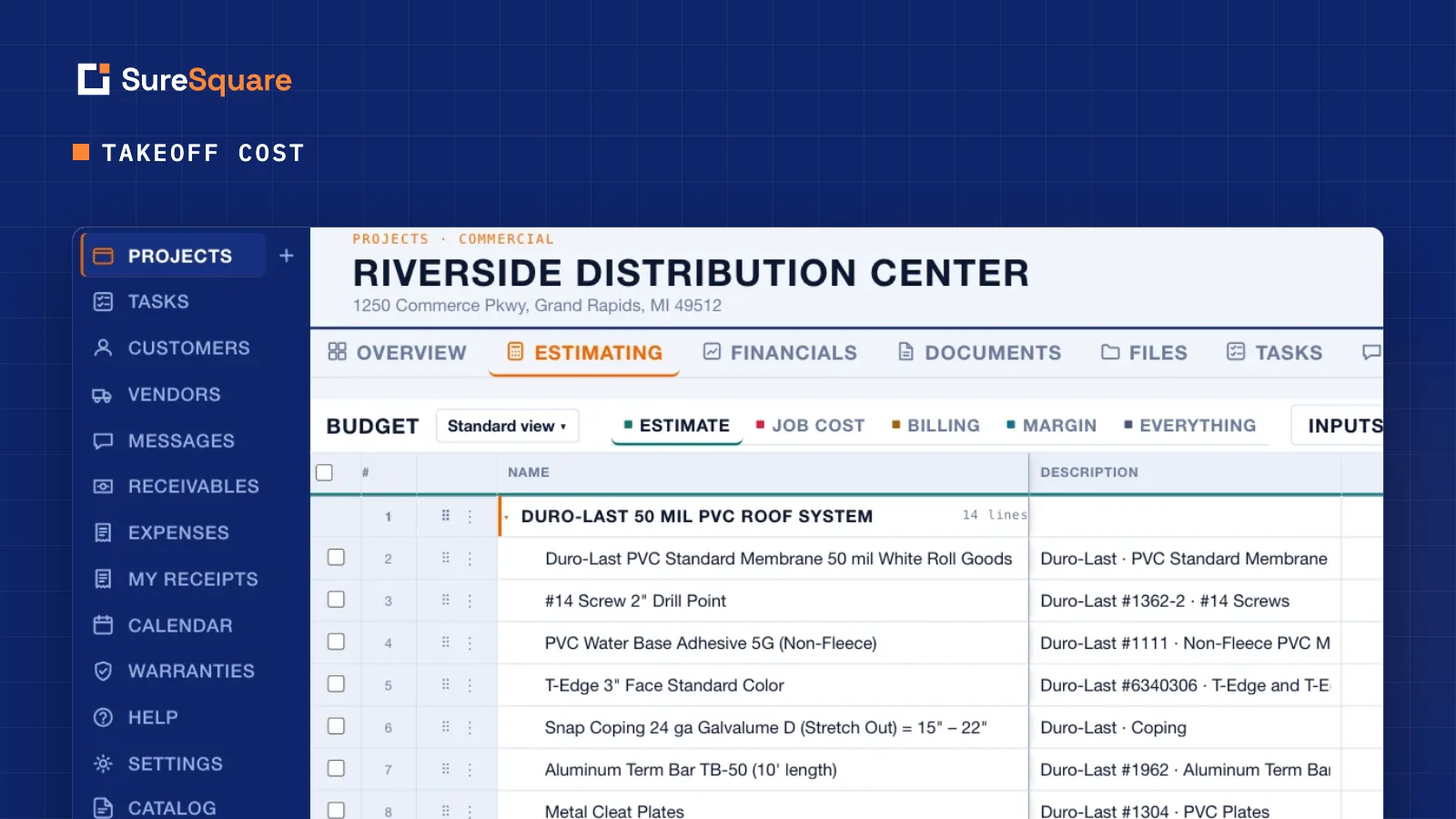
Estimators may price by SQ, LF, unit, labor hour, or an assembly-based material system. They may need separate values for steep-slope tear-off, underlayment, ice and water membrane, flashing, ridge vent, penetrations, tapered insulation, drains, or coating preparation. Commercial estimates may require alternates, exclusions, and multiple system options. The CRM should let your team build and revise that work without recreating the job in another program.
Measurement quality still controls the estimate quality. If plan-set takeoffs are part of your process, quantities for roof area, facets, pitch per facet, hips, ridges, valleys, perimeters, drains, and waste factors need to enter the estimate cleanly. The goal is not to eliminate estimator judgment. The goal is to give that judgment reliable numbers and a documented scope.
A good workflow preserves estimate versions. When the owner changes materials, the carrier approves a supplement, or the GC issues an addendum, your team should be able to see what changed and why. Overwriting the original bid without a record is how scope creep becomes an argument later.
Proposals should make approval visible
A sent proposal is not a sold job. Your team needs to know whether it was opened, discussed, revised, approved, or ignored. Electronic signatures reduce delay, but only if the signed version, scope, payment terms, and change history stay attached to the job.
Customer-facing documents also need to be clean. A homeowner should understand the selected system, exclusions, warranty terms, deposit amount, and next steps. A GC or property manager should be able to review scope language, alternates, and required documentation without chasing your office.
The CRM should make follow-up accountable. If a proposal has been sitting for seven days, somebody should own the next call. If the customer asks for a revised color or upgraded shingle, that request should be recorded where the estimator and production manager can see it.
Production Controls Protect Margin
Winning the job is only half the work. Production is where missed details become callbacks, schedule gaps, unpaid extras, and margin loss.
Scheduling must reflect field reality
A calendar alone is not production management. Schedulers need to see job status, crew availability, material readiness, permits, weather constraints, and dependencies such as deposit collection or customer approval. The crew needs the confirmed date, address, scope, contact information, and special instructions.
For multi-crew operations, GPS timesheets can add useful accountability. They help verify arrival and departure times, compare labor assumptions against actual field time, and identify jobs that consistently run long. Used correctly, this is not about watching crews from the office. It is about finding the operational gaps that erode margin.
A field-ready system should also accommodate real conditions. A job may move because decking damage was found, material delivery missed its window, or an insurance supplement is pending. The schedule must update the office, crew, and customer without three separate calls and a dozen texts.
Keep customer communication tied to the job
Customers do not care which department owns the answer. They want to know when the crew will arrive, what needs to be moved from the driveway, whether a payment is due, and who to contact after installation.
A customer portal can reduce routine back-and-forth when it gives homeowners or property managers access to the documents and updates they need. It should not replace direct communication on issues that need judgment. A supplement dispute, failed inspection, or unexpected substrate condition still requires a person who can explain the situation clearly.
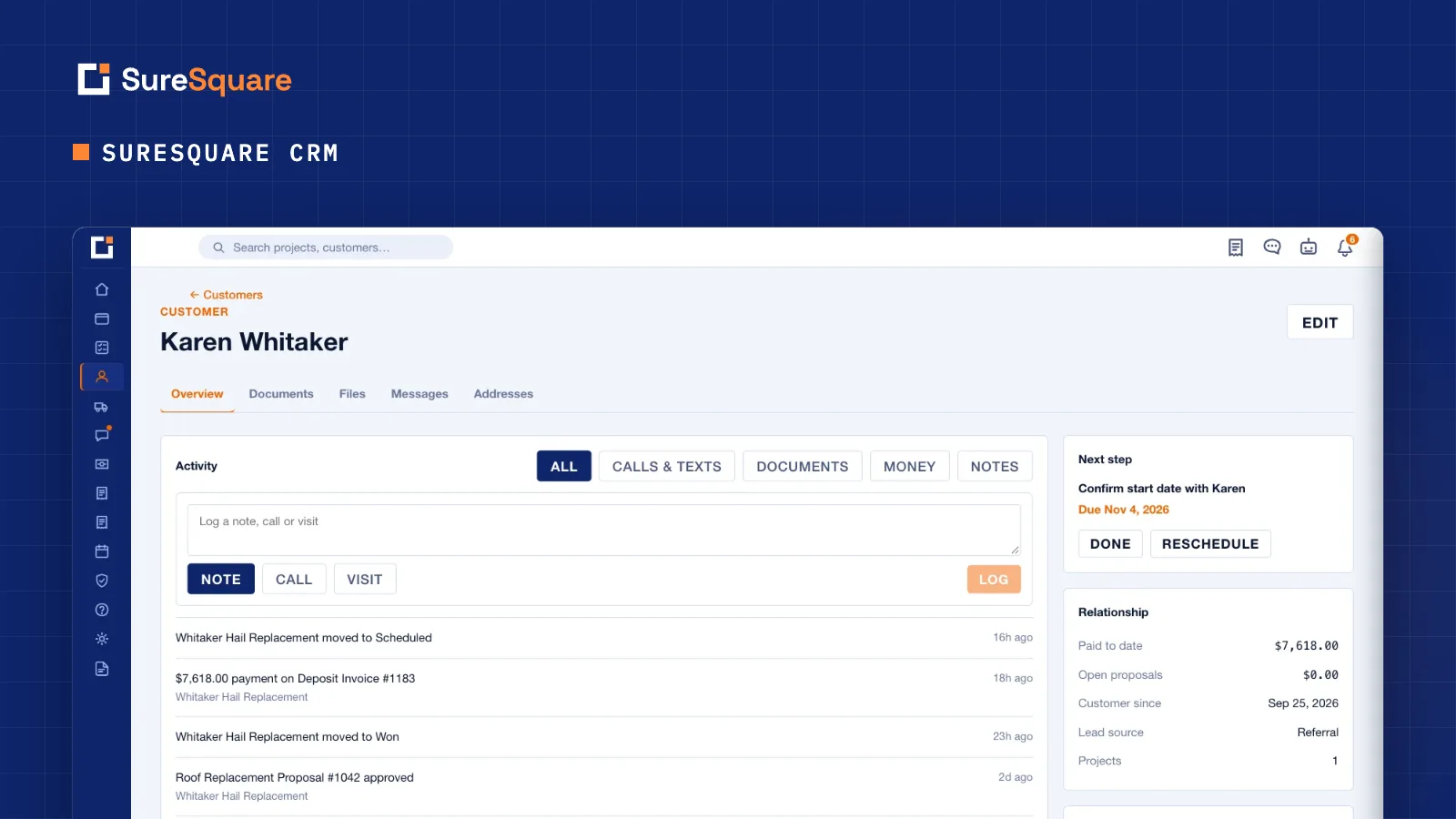
The same record should capture notes, messages, photos, documents, and status changes. If a production manager takes over a job, they should not have to ask sales to forward the last six customer emails.
Invoicing cannot be an afterthought
A job is not complete when the roof is installed. It is complete when the final invoice is accurate, approved changes are billed, and payment is collected.
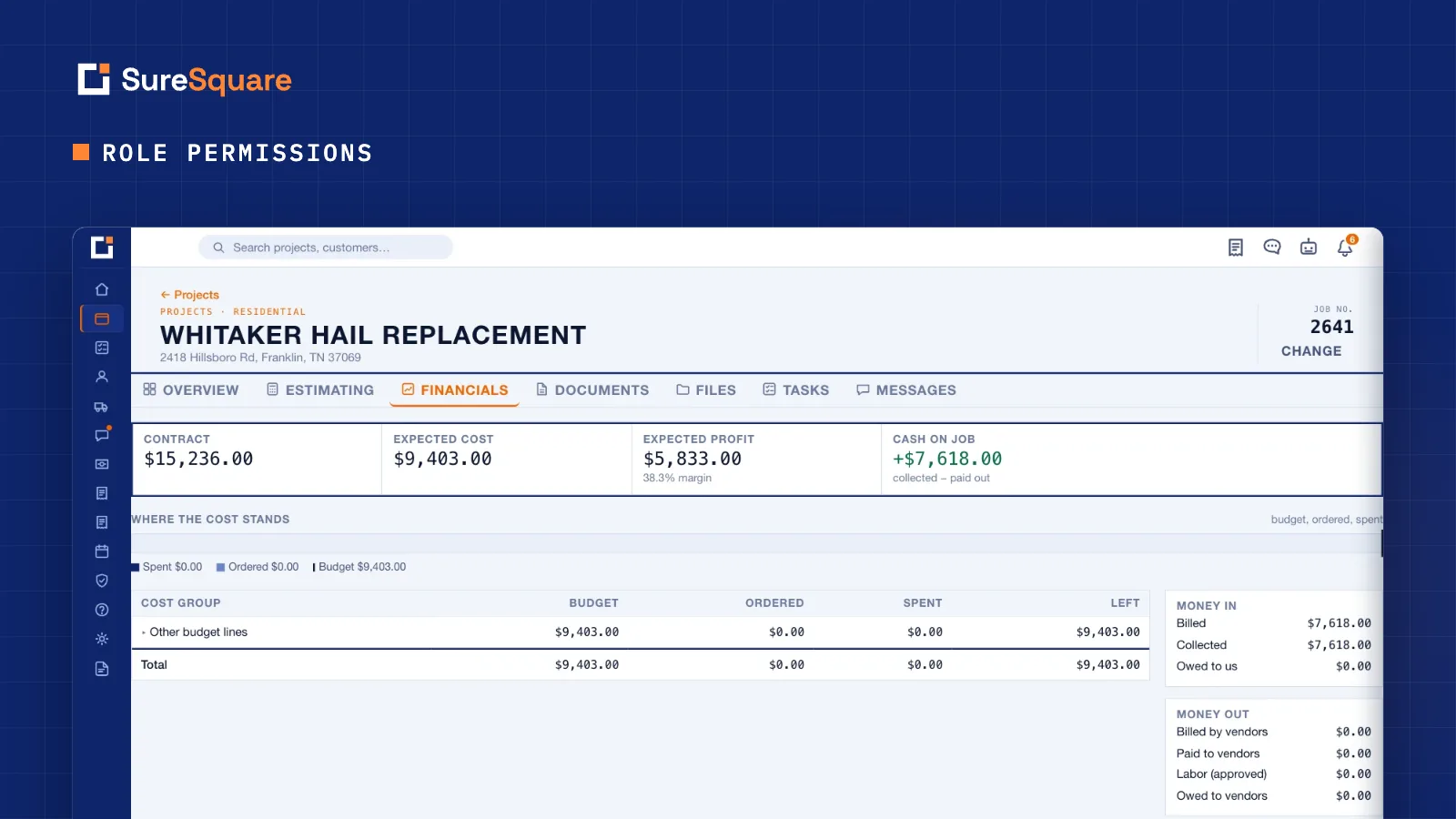
Your CRM should connect the approved scope to invoicing so the office is not rebuilding line items manually. It should also make change orders visible. If a crew replaces additional decking, adds flashing work, or performs an approved repair beyond the original scope, that work needs documentation before it becomes a billing dispute.
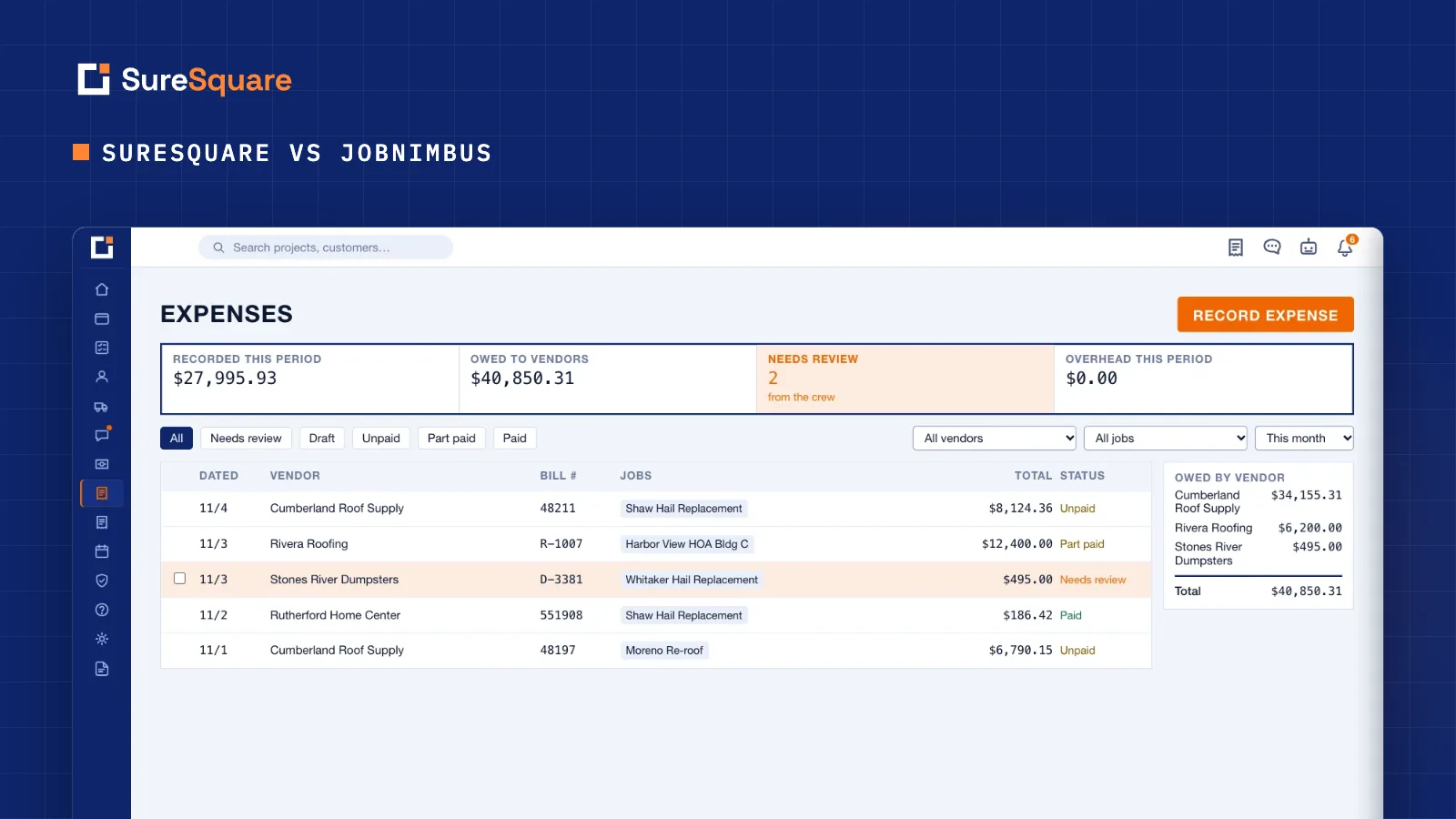
The right level of accounting integration depends on your business. Some contractors need detailed synchronization with their accounting platform. Others mainly need accurate invoices, payment tracking, and a clean handoff to bookkeeping. Do not pay for complexity your team will not use. But do not accept disconnected records that make reconciliation harder every month.
Choose a Roofing CRM by Its Handoffs
Feature lists can be misleading. A platform may advertise automation, reporting, and customization while still making roofing teams enter the same information in multiple places. Evaluate the system by following one real job from first call through final payment.
Ask these questions during a demo:
- Can a lead become an inspection, estimate, signed proposal, scheduled job, invoice, and paid project without duplicate data entry?
- Can estimators price the units and material systems used in our actual scopes, including SQ, LF, waste factors, and revisions?
- Can operations see the latest signed scope, customer notes, documents, crew details, and job status in one record?
- Can the system fit our process without a long customization project that nobody on the team can maintain?
Also look at adoption honestly. The best software on paper fails if field teams will not use it or office staff need constant workarounds. Start with the few handoffs causing the most friction: unassigned leads, slow estimates, unsigned proposals, schedule confusion, or incomplete invoices. Fixing those first creates a reason for the team to use the system consistently.
SureSquare is built around that contractor workflow, with lead and pipeline management, multiple estimating methods, e-signed proposals, crew scheduling, GPS timesheets, invoicing, and customer communication in one operating record. Contractors can use the CRM independently or pair it with human-reviewed roofing takeoffs when plan measurement is the bottleneck.
A CRM should not make your business feel more corporate. It should make the next handoff clear, protect the scope you sold, and keep your people focused on the roof instead of chasing information.