A proposal can be accurate and still lose the job. If the scope is hard to follow, the exclusions are buried, or the customer waits three days for a revision, your sales team is working uphill. Roofing proposal software gives contractors a controlled way to turn measurements, pricing, and scope decisions into an approval-ready document without rebuilding the job from scratch.
For residential reroofs, speed often decides who gets the signature. For commercial and restoration work, documentation decides whether the scope survives review. The right system needs to handle both without forcing estimators, salespeople, and operations staff into separate spreadsheets, inboxes, and paper files.
What Roofing Proposal Software Should Actually Do
Proposal software is not just a document template with a logo at the top. It should carry the job from lead through estimate, customer approval, production, and invoice while preserving the details that protect margin.
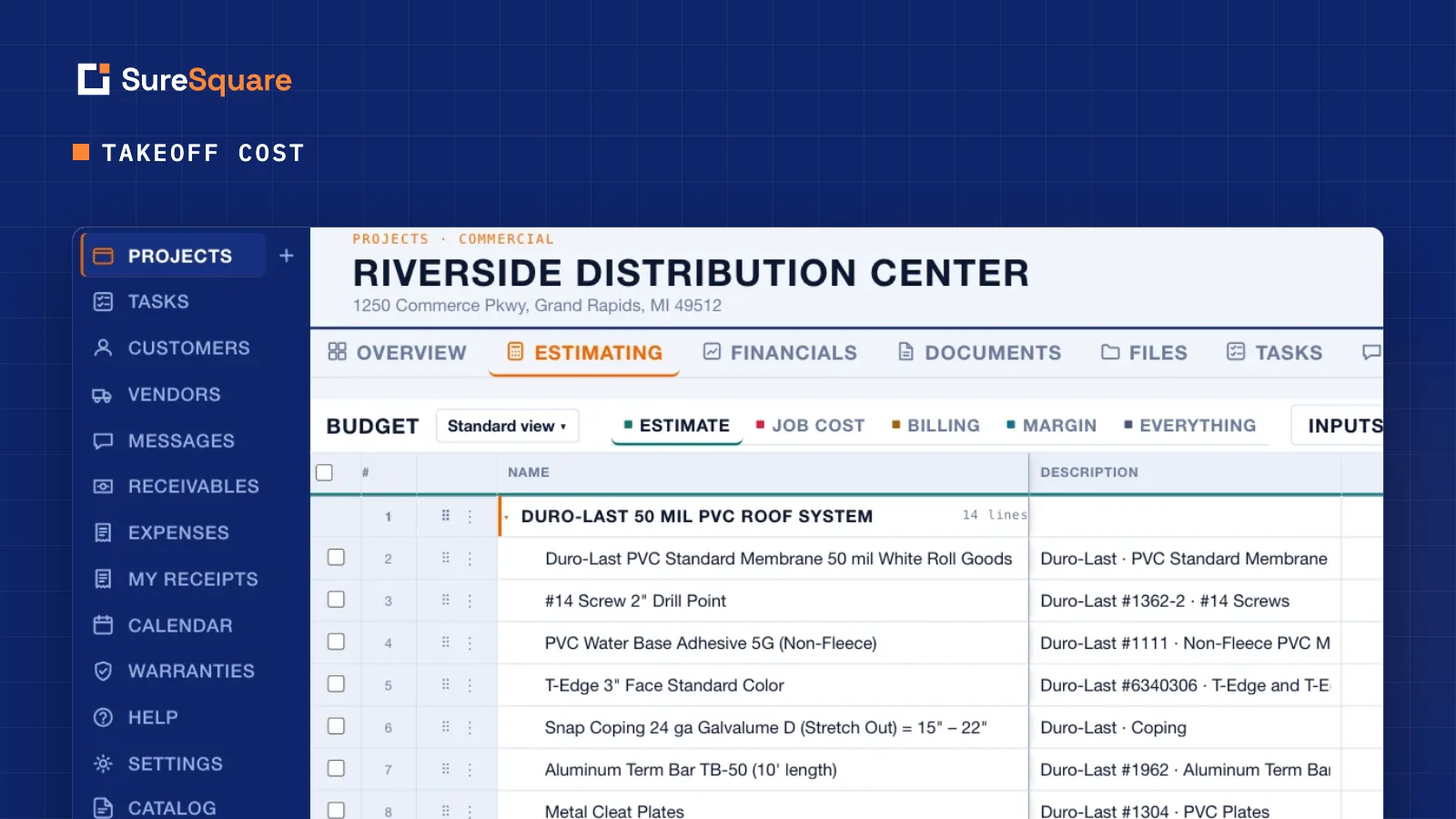
That starts with the estimate. A salesperson should be able to build pricing from the quantities that matter: SQ by material type, LF of ridge and hip, valley LF, eave and rake, pitch per facet, penetrations, flashing, drains, tapered insulation, edge metal, and waste factors. The proposal should then translate those technical quantities into a scope the customer can understand.
Those are related tasks, but they are not identical. The estimator needs enough detail to validate material and labor costs. The customer needs a clear explanation of what is included, what is excluded, and what happens if concealed conditions change the work. Good software keeps the detailed estimate behind the proposal while ensuring both documents come from the same job data.
A practical system also needs version control. Roof replacements change after the first site visit. The owner may choose a different shingle line, the adjuster may approve additional decking, or a commercial customer may request alternate membrane systems. If revisions live in separate PDFs with unclear names, someone will eventually install or invoice the wrong scope.
Start With the Numbers, Not the Proposal Template
A clean proposal cannot fix weak quantities. If the roof area is short, the ridge cap is missed, or the waste factor does not match the geometry and material system, the proposal may win work at a loss.
This is where contractors need to separate roofing proposal software from roofing measurement. Some platforms generate automated measurements, which can be useful for a quick first pass on straightforward roofs. But automated output is not always enough for a complex steep-slope roof, a plan set with multiple levels, or a commercial scope where drains, curbs, parapets, penetrations, and transitions drive cost.
A human-reviewed takeoff gives the proposal a stronger base. An estimator can work through the plan set, identify roof sections, apply pitch per facet, and report quantities in a format that can be checked before pricing. The goal is not to create more paperwork. It is to make sure the person issuing a $60,000 proposal is not relying on a roof area total with no usable detail behind it.
For many contractors, the best workflow is simple: upload plans or collect field measurements, verify the takeoff, build the estimate, then generate the proposal from the approved scope. When the estimate changes, the proposal should update without rekeying line items.
Match the proposal detail to the buyer
A homeowner usually does not need a material takeoff report. They need to know the roof system, color or product selection, tear-off assumptions, warranty, payment schedule, and what the crew will do around landscaping, gutters, and cleanup.
A general contractor, property manager, or commercial owner needs more. They may need alternates, unit pricing, exclusions, schedule assumptions, safety requirements, manufacturer requirements, and a clear division between base bid and change work. Roofing proposal software should let your team produce the right level of detail without creating a new process for every job type.
Build a Proposal That Reduces Scope Arguments
The strongest proposals make decisions visible before the contract is signed. That does not mean filling every page with legal language. It means stating the job conditions that can affect price and setting a process for handling them.
A reroof proposal should clearly address tear-off depth, decking replacement assumptions, rotten wood or concealed damage, flashing replacement, ventilation, permit responsibility, and disposal. A low-slope proposal may need to identify existing system conditions, substrate assumptions, moisture investigation limits, drainage work, tie-ins, edge details, and manufacturer inspection requirements.
If the work is insurance-related, the proposal should distinguish between the approved carrier scope and contractor-recommended work. Do not bury upgrades or non-covered items inside a broad total. Show them as separate options or allowances so the homeowner, adjuster, and project team can see what changed.
Clear options can also improve close rates when used with discipline. Offer meaningful choices such as good, better, and best shingle systems, or a base membrane scope with defined upgrade options. Avoid presenting five near-identical packages that create confusion and slow approval.
Speed Matters, but Approval Is the Real Goal
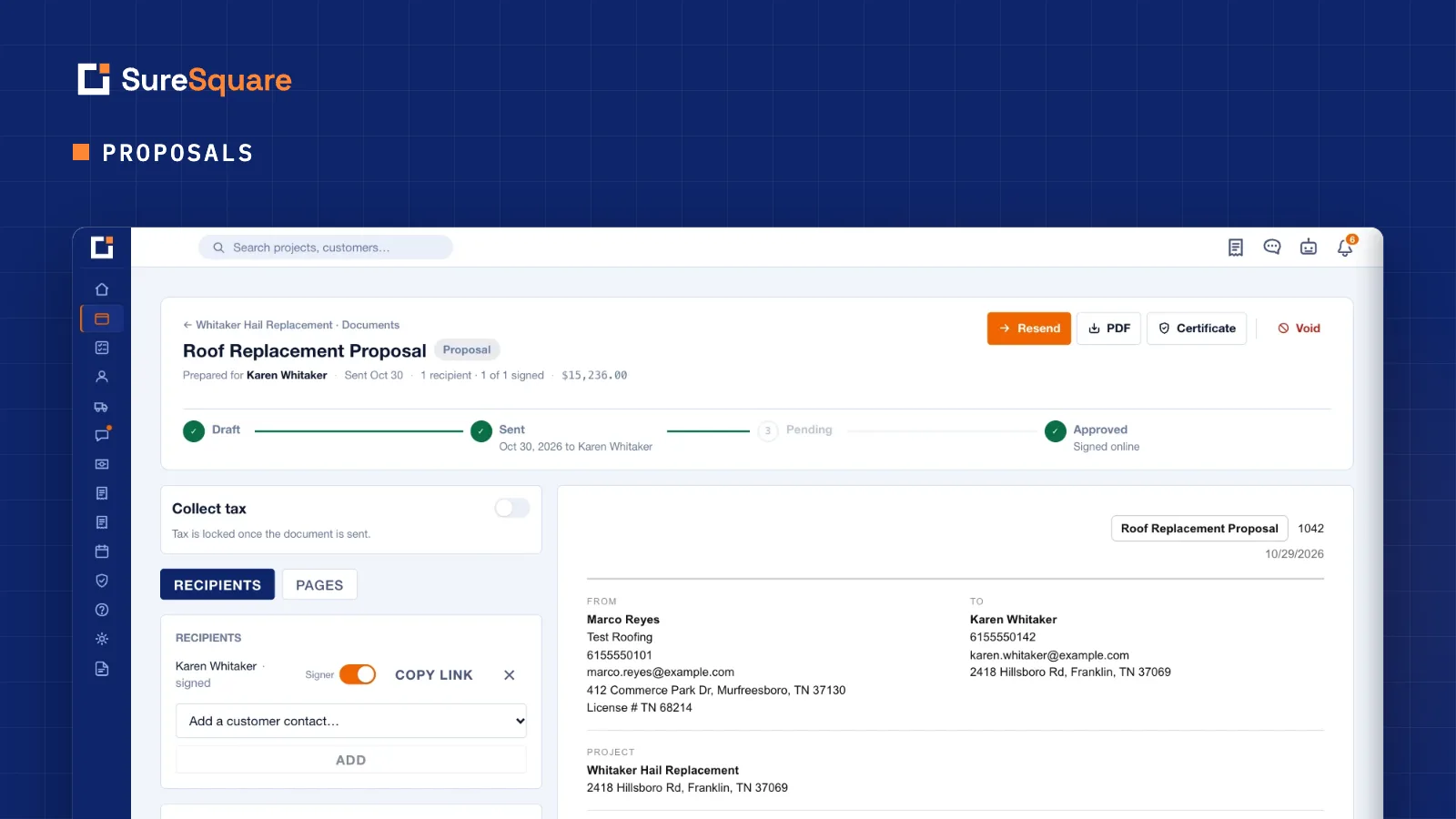
Sending a proposal fast is valuable only if it moves the job forward. A system should make it easy to send a branded document, collect an e-signature, record acceptance, and notify the next person in the workflow.
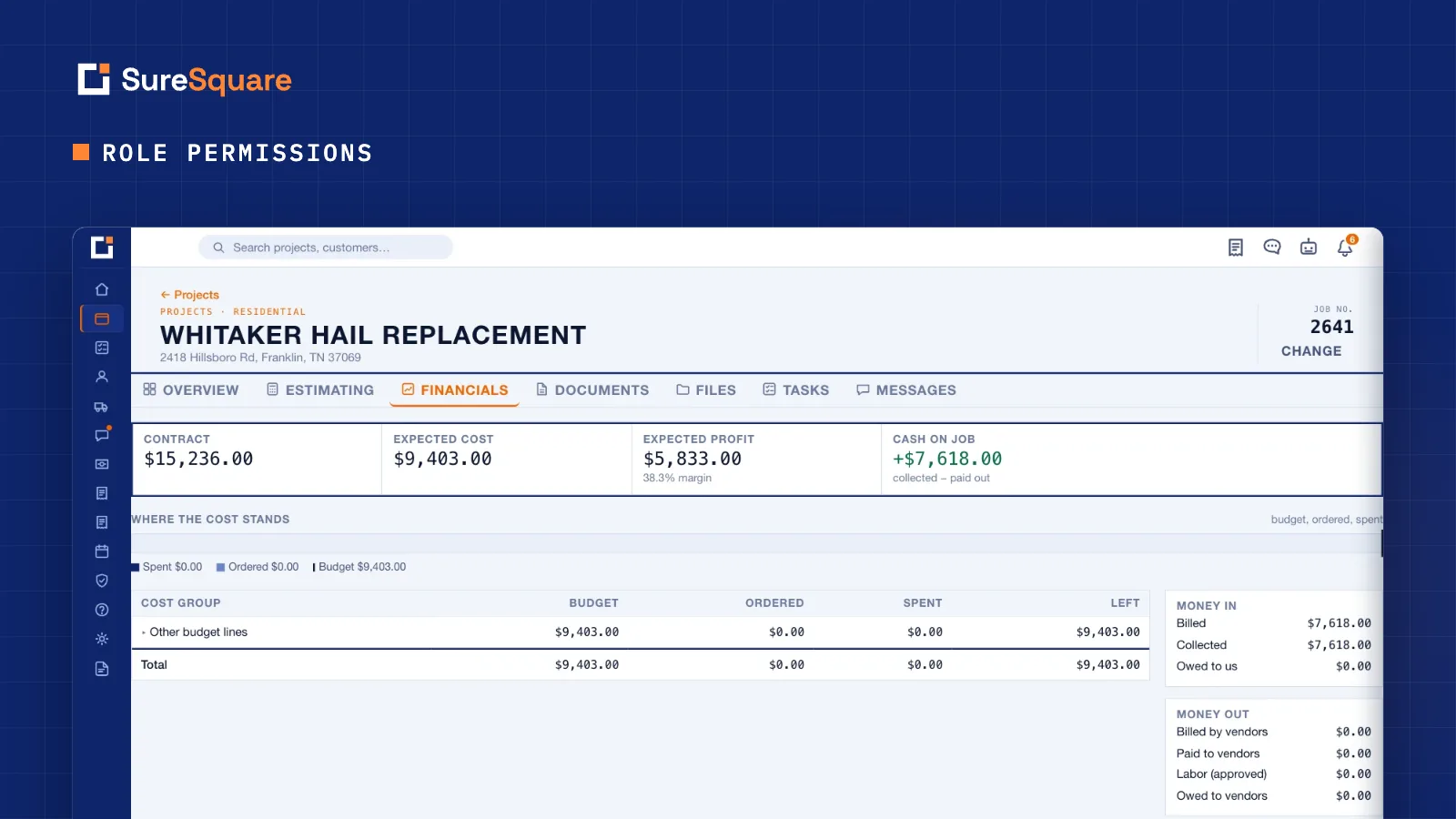
Once signed, the approved scope should be available to production. The crew scheduler should not have to hunt through email for a PDF. The project manager should see the selected system, approved options, notes, documents, payment terms, and customer communication in the same job record.
This handoff is where many contractors lose margin. Sales sells one scope, production receives another, and accounting invoices from a third version. The gap creates missed upgrades, wrong material orders, avoidable change orders, and customer friction.
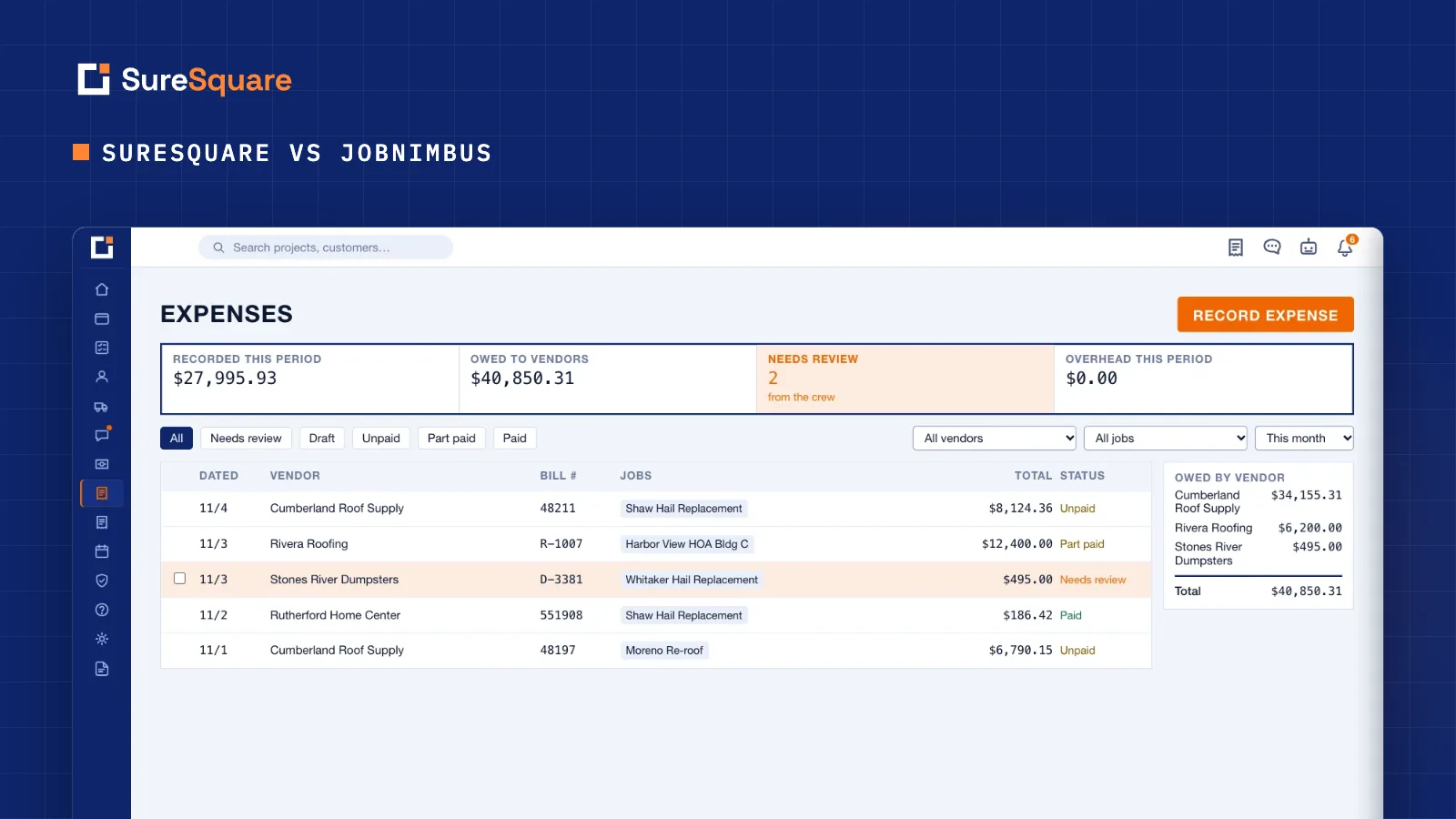
Roofing proposal software works best when it connects to the rest of the operation. Leads feed the pipeline. Estimates feed proposals. Signed proposals feed scheduling, job documentation, invoices, and customer communication. That connection does not need to be complicated. It needs to be reliable enough that your team trusts the job record.
Questions to Ask Before Choosing a System
Before committing to software, walk through an actual recent job instead of watching a generic demo. Use a job with revisions, a change order, customer communication, and an invoice. Then ask whether the system can handle the work without duplicate entry.
Look at how it prices labor and materials. Some contractors need template-based pricing for standard residential systems. Others need manual line-item control, assemblies, allowances, unit costs, or multiple estimate methods for commercial work. The right answer depends on how your company bids, not on which screen looks cleaner.
Check whether proposal versions are easy to track and whether the signed version is locked to the job file. Review e-signature flow, deposit collection requirements, customer portal access, and whether internal notes stay separate from customer-facing content.
Also ask who owns the setup work. A platform can have every feature on the list and still fail if your catalog, labor rates, templates, and workflows are not configured for your operation. Start with the proposal types that drive most of your revenue, prove the process, then expand.
Use Software to Standardize Judgment, Not Replace It
Software should remove repeat work, not remove experienced review. It can calculate, populate templates, route approvals, and preserve records. It cannot inspect a questionable transition detail, decide whether the roof deck is suitable, or recognize that a bid needs a higher waste factor because the roof geometry will punish a tight material order.
That is why roofing-specific workflows matter. SureSquare combines proposal and job-management tools with the option to use human-reviewed roofing takeoffs when plan sets or roof complexity require a closer look. Contractors can use the CRM on its own or bring in estimating support without forcing every job into the same process.
The best operating standard is straightforward: measure carefully, price from a verified scope, make terms clear, get the signature, and hand production the exact job that was sold. When your proposal process does that consistently, it becomes more than a sales document. It becomes the first reliable record of a profitable job.