Most roofing companies find out what a job made weeks after the crew left the site. By then the extra squares of shingles, the second dumpster and the Saturday overtime are already paid, and the only thing left to do is shrug and bid the next one the same way.
Job costing fixes that, but only if it runs while the job is still open. This post walks through how to track budget vs actual on a roofing job, what belongs in each column, and where the margin usually leaks out.
What budget vs actual means on a roof
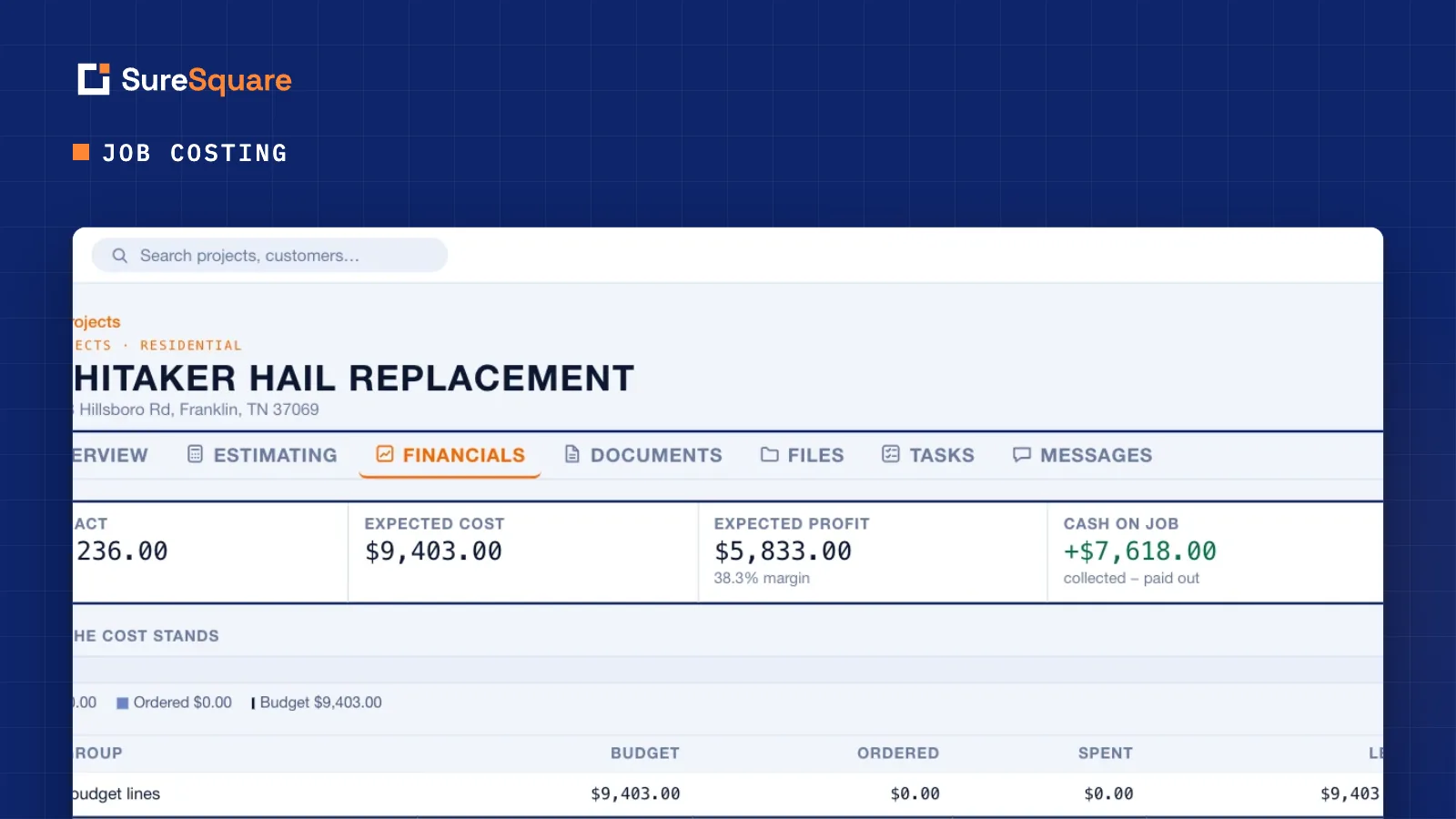
The budget is what you said the job would cost when you priced it. The actual is what it really cost. On a roofing job those two numbers split into a few buckets that every estimator already knows:
- Materials: shingles or membrane, underlayment, ice and water shield, drip edge, starter, ridge cap, flashing, fasteners, insulation and adhesive.
- Labor: tear-off, install, detail work and cleanup, by crew and by pay rate.
- Subcontractors: gutters, sheet metal, carpentry or anything you hand off.
- Equipment and disposal: dumpsters, lifts, hoists and dump fees.
- Permits and other job costs: permit fees, engineering letters, inspections.
Each line on your estimate should map to one of these buckets. If it does not, you cannot compare the bid to the bill later, and the whole exercise turns into guesswork.
Why the gap shows up so late
In most offices the estimate lives in one file, the supplier invoices land in an inbox, and the timesheets sit in another app or on paper. Nobody puts the three side by side until month end, if then. A few common patterns make it worse:
- Material orders go out by phone and nobody records the price until the bill shows up.
- A crew lead adds a day for rotten decking and the office learns about it from payroll.
- Returns and credits from the supplier never get tied back to the job.
- Change orders get done in the field but never written up, so the extra cost has no extra revenue against it.
None of these are big on their own. Stack three of them on a 40 square re-roof and a healthy margin turns thin.
Start with an estimate built to be tracked
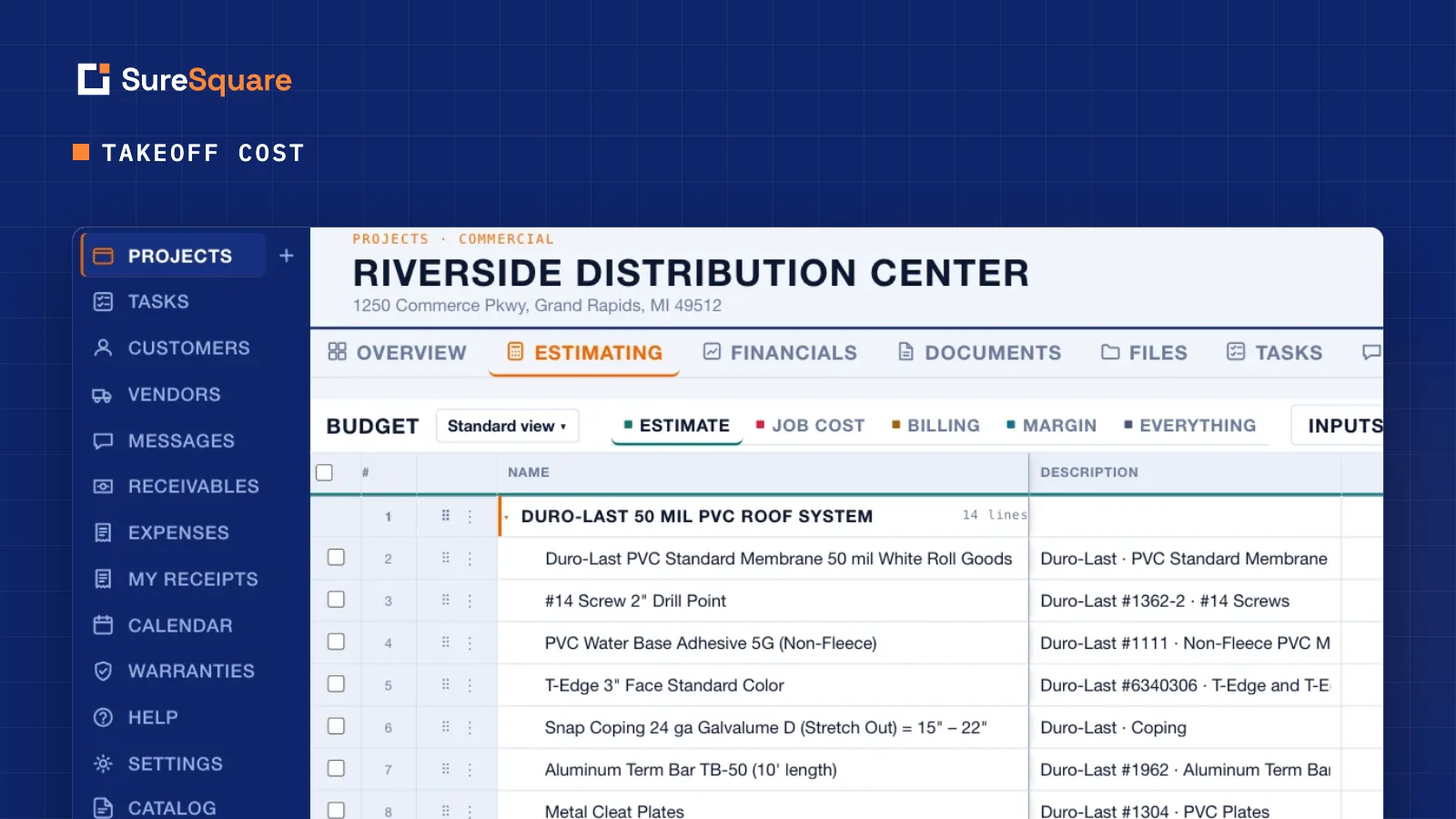
Job costing starts at the estimate. If the bid is one lump number, there is nothing to measure against. Break it into lines with quantities and unit costs: 42 squares of shingles, 380 LF of drip edge, 6 rolls of ice and water, two crew days of tear-off.
When quantities come from the roof measurements instead of being typed by hand, they stay consistent. Change the eave length and the drip edge and starter follow. That matters later, because when the actual comes in high you want to know whether the estimate was short or the field used more than it should.
If you buy takeoffs, keep the takeoff quantities as the starting point of the budget so the numbers trace back to the plan. Any quantity is only as good as the plan set and the assumptions behind it, which is why we publish an estimating disclaimer on how takeoff quantities should be checked.
Track committed cost, not only paid cost
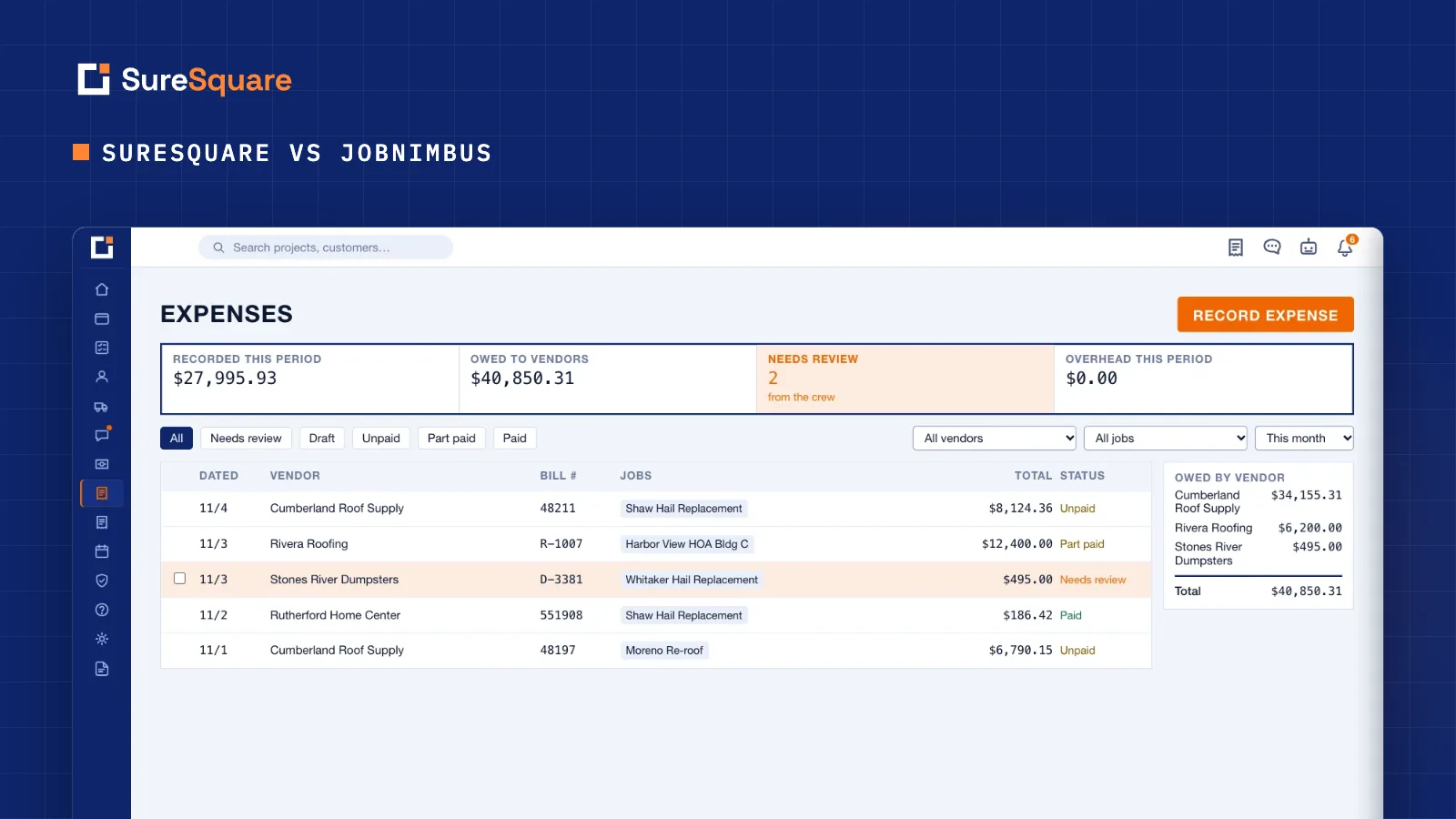
The biggest timing gap in roofing is between ordering and paying. You order material for the job on Monday. The supplier bill arrives three weeks later. If you only count costs when they are paid, the job looks profitable for three weeks longer than it is.
Committed cost closes that gap. A committed cost is money you have promised but not yet paid: a vendor order, a sub agreement, a dumpster booking. Record it against the job when you commit, then match the bill to it when it arrives. Now the job shows three numbers per line:
- Budget: what you estimated.
- Committed: what you have ordered or agreed to.
- Actual: what has been billed or paid.
If committed cost on shingles is already over budget before the crew starts, you can call the supplier, check the order, or adjust the change order conversation with the homeowner while there is still time.
Get labor in at the right number
Labor is usually the line that moves the most and gets recorded the least. Two things keep it honest.
First, time has to be captured on the job, not reconstructed on Friday. A GPS clock in and out ties hours to the right address.
Second, the cost of those hours needs to hold once the week is approved. If a roofer gets a raise in March, January's jobs should not suddenly look more expensive. Lock the labor cost at the rate that was paid, at the moment the timesheet is approved, and your historical job costs stay true.
It also helps to track more than one pay rate per person. A crew lead who runs tear-off one day and does sheet metal the next may be paid differently for each, and the job should carry the rate that was actually paid.
Where roofing margin usually leaks
When you run budget vs actual across a few dozen jobs, the same lines tend to come up over budget. Watch these first:
Waste on cut-up roofs
A simple gable and a hip roof with six valleys and two dormers do not use the same waste factor. If the actual shingle count keeps beating the budget on complex roofs, the waste factor in your estimate is too low for that roof type.
Decking and hidden damage
Replacement decking is often priced as an allowance. If you are eating it on most jobs, either raise the allowance or write it as a per-sheet unit price in the contract so extra sheets become a change order.
Flashing and edge metal
Step flashing, counter flashing, drip edge and coping are easy to undercount. On commercial work, parapet and coping LF can swing the metal budget a lot.
Extra trips and extra days
Weather days, a missed delivery or a return trip for a punch list item all cost crew time. If they keep showing up, they belong in the estimate as a line, not as a surprise.
Work done without a change order
This is the most common leak. The homeowner asks for a vent swap or the GC adds a curb and the crew does it. The cost lands on the job, the revenue never does. A written change order before the work, with the cost added to the budget, keeps both sides of the job in step.
Who should see the numbers
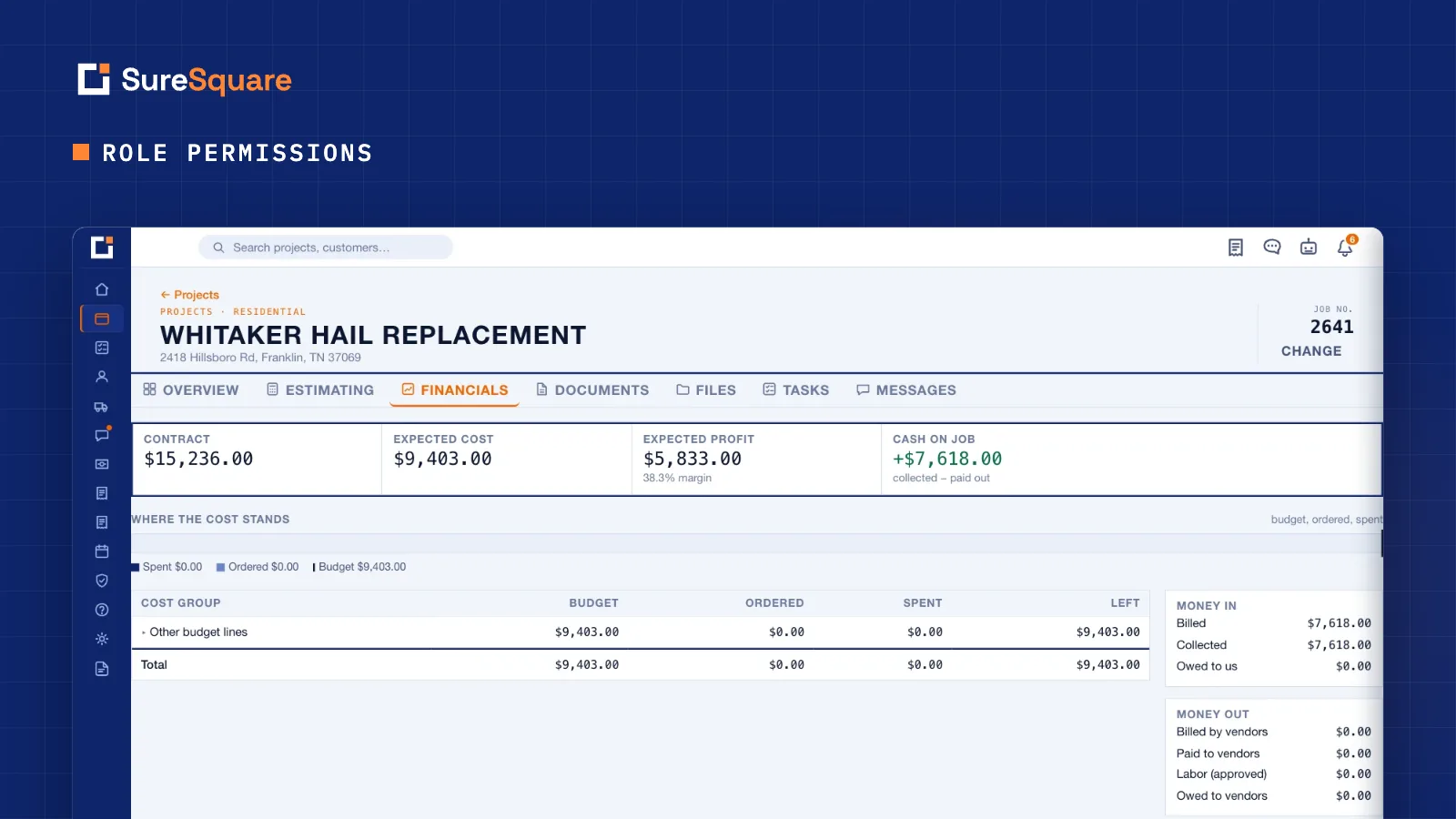
Job costing is sensitive. Owners and managers need contract price, cost and margin. Crews need the scope, the schedule and the material list, but not what the job makes. A good setup lets you show margin only to the roles you choose, so you can put the job in front of the crew without handing them the financials.
A simple weekly job costing routine
You do not need an accountant to run this. A 20 minute review once a week covers most of it:
- Open every active job and compare committed cost to budget by line.
- Match any new supplier bills to their orders and record credits and returns.
- Approve timesheets so labor cost lands on the job at the paid rate.
- Write up any field changes as change orders before the next invoice goes out.
- Flag any job where committed plus actual is above budget on a major line.
When the job closes, write down why the biggest lines were over or under. After a season you will have a short list of waste factors, labor days and allowances to fix in your estimating, and the next round of bids gets tighter.
Keeping estimate and cost in one place
Budget vs actual works best when the estimate, the vendor orders, the bills and the timesheets all live on the same job. SureSquare CRM keeps them together: estimates built from a cost catalog with formula-driven quantities, vendor orders and bills on the job, GPS timesheets with labor cost frozen at approval, and budget vs actual with committed costs, with margin visible only to the roles you pick. If you want to see what it costs to run your jobs that way, the pricing page lays it out.